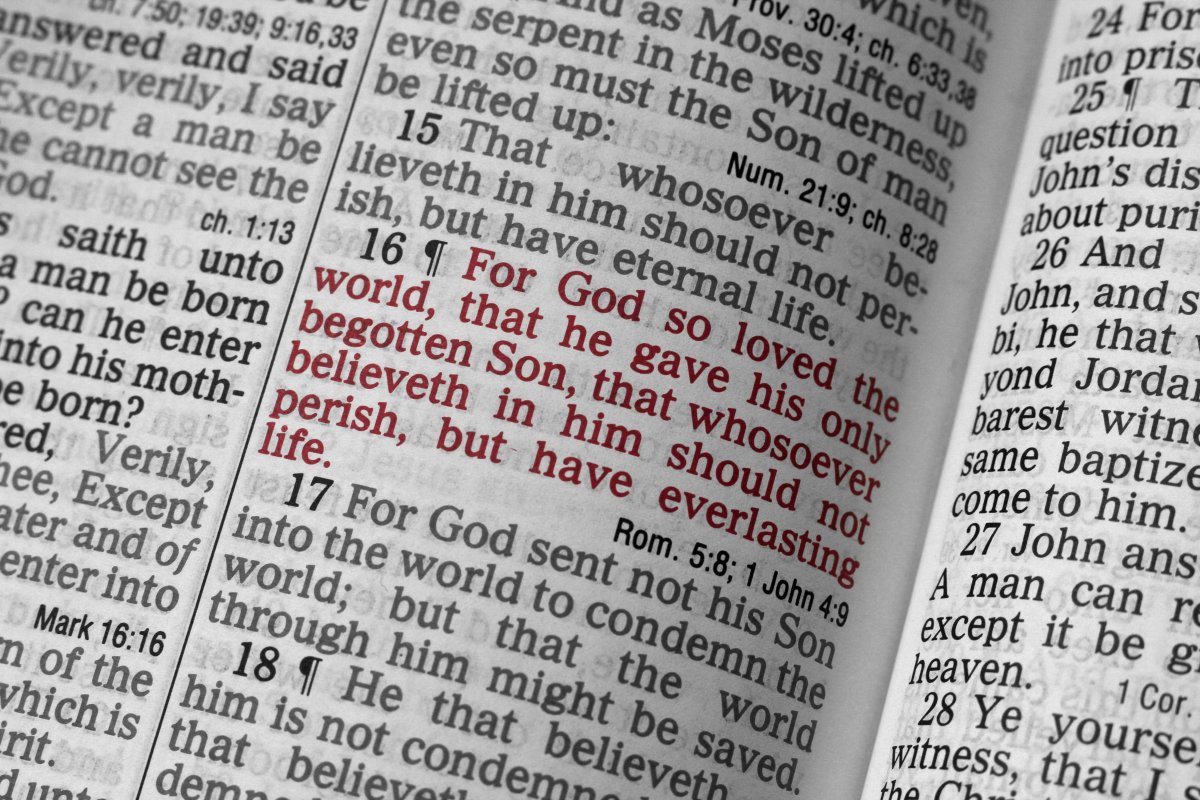
Trusting God in the Middle of Confusion, Silence, and Sovereign Darkness
Habakkuk 3:17–18 (ESV) Though the fig tree should not blossom, nor fruit be on the vines, the produce of the olive fail and the fields yield no food, the flock be cut off from the fold and there be no herd in the stalls, yet I will rejoice in the Lord; I will take joy in the God of my salvation.
#
INTRODUCTION: The Prophet Who Argued With God
Most of the prophets in the Old Testament speak to people on behalf of God. Habakkuk does something almost shockingly different: he speaks to God on behalf of his own bewildered conscience. He does not open his book by announcing a divine oracle to Israel. He opens it with a complaint. A raw, theologically serious, emotionally unguarded complaint directed at God himself: "O Lord, how long shall I cry for help, and you will not hear?"
Habakkuk is the prophet of honest confusion. He lived in Judah during the late seventh century BC, probably around 605–598 BC, in the years just before and during Nebuchadnezzar's first campaigns against Jerusalem. He watched his nation from the inside — the violence, the injustice, the legal corruption, the oppression of the poor by the powerful — and he could not reconcile what he saw with what he believed about God. He believed in a God of justice. He saw injustice everywhere and God apparently doing nothing. The gap between his theology and his experience was unbearable, and he did not resolve that gap by adjusting his expectations downward. He brought it to God directly, with all its jagged edges intact.
What makes Habakkuk extraordinary is what happens next. God answers. Not with the answer Habakkuk was hoping for — God's answer makes everything more confusing, not less, at least initially. God tells Habakkuk that he is raising up the Babylonians — the most brutal military power of the ancient Near East — as his instrument of judgment against Judah. Habakkuk is so staggered by this that he launches into a second complaint even more intense than the first: how can you use a people more wicked than us to punish us? What kind of justice is that? And then, having fired his second question into the heavens, Habakkuk does something remarkable: he climbs to his watchtower and waits.
The short book of Habakkuk — only three chapters, forty-seven verses — is one of the most profound explorations of the problem of suffering, divine silence, and trust in the Old Testament. It covers the distance from anguished complaint to soaring doxology, from "how long will you not hear?" to "I will rejoice in the God of my salvation" — and the journey between those two poles is not a journey of easy resolution but of hard-won, theologically grounded, experientially tested trust. This is not a book that tells you everything will be fine. It is a book that tells you that God is trustworthy even when nothing is fine.
#
THE STRUCTURE OF HABAKKUK
Habakkuk is organized as a dialogue and then a psalm. Chapters 1–2 contain a back-and-forth between the prophet and God: Habakkuk's first complaint (1:1–4), God's first answer (1:5–11), Habakkuk's second complaint (1:12–2:1), God's second answer (2:2–20), which includes the famous five woes against Babylon. Chapter 3 is a complete psalm — a prayer-poem in the style of the Psalms — in which Habakkuk processes everything he has received and arrives at the confession of trust that closes the book. The movement from complaint to trust is the spiritual journey the book is inviting every reader to take.
Why study Habakkuk in our moment? Because we live in an era of profound, public, persistent confusion about God and suffering. People are asking Habakkuk's questions everywhere: Why does God allow this? Why is God silent while the innocent suffer? How can I trust a God who seems to do nothing while the powerful exploit the weak? These are not new questions that modern skepticism has invented. They are the ancient questions of a faithful prophet who would not let go of either God or honest experience, and who discovered — through the long, difficult passage of complaint and waiting and encounter — that trust is not the absence of questions but the decision to remain in conversation with the One of whom the questions are asked.
#
CHAPTER ONE
#
The First Complaint: When God Seems Silent
Habakkuk 1:1–4 (ESV) The oracle that Habakkuk the prophet saw. O Lord, how long shall I cry for help, and you will not hear? Or cry to you "Violence!" and you will not save? Why do you make me see iniquity, and why do you idly look at wrong? Destruction and violence are before me; strife and contention arise. So the law is paralyzed, and justice never goes forth. For the wicked surround the righteous; so justice goes forth perverted.
Four questions in four verses. Not polite requests — urgent, raw, theological demands directed at God. *"How long shall I cry for help, and you will not hear?"
- *"Why do you make me see iniquity?"
- These are not the questions of a person who has given up on God. They are the questions of a person who takes God seriously enough to hold him to his own stated character. Habakkuk is not an atheist complaining that the universe is indifferent. He is a believer complaining that the God he believes in is behaving inconsistently with who he claims to be.
Notice what Habakkuk is describing. Violence, iniquity, perversity, destruction, strife, paralyzed law, perverted justice, the wicked surrounding the righteous. This is not the complaint of a person having a bad day. This is the complaint of someone who has been watching systemic injustice operate unchecked — where the legal system is compromised, where the powerful crush the weak without consequence, where the righteous are outnumbered and outmaneuvered at every turn. Habakkuk has been praying about this. He has been crying out about this. And God has not answered. The silence is what is breaking him.
The phrase "the law is paralyzed" is chilling in its precision. The Hebrew word for paralyzed (pug) means to grow numb, to go cold and lifeless. The law has lost its animating force — not because it has been formally abolished, but because no one with the power to enforce it is willing to do so. Justice never "goes forth" — never emerges, never prevails, never reaches its destination. This is the picture of institutional moral failure: the structures that exist to protect the vulnerable are still formally in place, but they have been hollowed out from within by the corruption of those who run them.
#
UNDERSTANDING
Habakkuk's complaint belongs to a long tradition in the Old Testament that scholars call 'lament.' The lament psalms — Psalms 10, 13, 22, 44, 88, and many others — share Habakkuk's structure: an honest cry about the gap between what God has promised and what is actually happening, directed to God personally, without softening the pain or the theological tension. The lament form is one of the most important and most neglected aspects of biblical spirituality. It says: the appropriate response to suffering that does not make sense is not silence, not stoic acceptance, not the forced positivity of 'everything happens for a reason,' but honest, theologically grounded complaint brought directly to God. God is not fragile. He can handle your confusion.
Habakkuk 1:5–11 (ESV) "Look among the nations, and see; wonder and be astounded. For I am doing a work in your days that you would not believe if told. For behold, I am raising up the Chaldeans, that bitter and hasty nation, who march through the breadth of the earth, to seize dwellings not their own. They are dreaded and fearsome; their justice and dignity go forth from themselves. Their horses are swifter than leopards, more fierce than the evening wolves; their horsemen press proudly on. Their horsemen come from afar; they fly like an eagle swift to devour. They all come for violence; all their faces forward. They gather captives like sand. At kings they scoff, and at rulers they laugh. They laugh at every fortress, for they pile up earth and take it. Then they sweep by like the wind and go on, guilty men, whose own might is their god!"
God's answer to Habakkuk's first complaint is one of the most startling divine responses in all of prophetic literature. Habakkuk has asked God to do something about injustice. God responds by telling him what he is doing: raising up the Chaldeans — the Babylonian Empire under Nebuchadnezzar — as his instrument of judgment against Judah. The first two words of God's answer set the tone: *"Look among the nations, and see."
- Look. Pay attention. There is more happening in the world than what you can see from inside Judah's borders. The sovereign work of God is not confined to what is visible to the anxious observer inside the crisis.
But what God shows Habakkuk when he looks is not comforting. The Chaldeans are described in some of the most vivid, terrifying language in the Old Testament: a bitter and hasty nation, horses swifter than leopards, fiercer than evening wolves, sweeping by like the wind. They come for violence. They gather prisoners like sand. They scoff at kings. They laugh at every stronghold. This is not a description of a righteous instrument being deployed for a righteous purpose. This is a description of raw, imperial, amoral power — a nation whose god is its own strength, a people who recognize no authority beyond their own military capacity.
And God is telling Habakkuk: I am raising them up. This is my doing. These terrifying people, this brutal empire — this is the work I am doing in your days that you will not believe even when you are told it. The sovereignty of God here is not the comfortable sovereignty of a God who only uses clean instruments and pleasant means. It is the disturbing sovereignty of a God who is working his purposes through the very forces that seem most contrary to those purposes. This is the harder doctrine of divine sovereignty, and Habakkuk is about to be driven by it from his first complaint straight into his second.
#
❤ Heart Moment
Before we move to Habakkuk's response, let us sit with God's first answer. It does not solve the problem. It deepens it. This is often the experience of genuine encounter with God in prayer: you come with a question that is troubling you and you leave with a larger question that troubles you even more. But notice what God is also saying between the lines of this terrifying answer: I am not absent. I have not gone deaf. I am at work in ways that exceed your vision and your categories. *"I am doing a work in your days which you would not believe if told."
- The silence you have been experiencing has not been divine inaction. It has been divine activity that was simply invisible to you from where you were standing.
#
Q: Habakkuk essentially argues with God — is it appropriate for a believer to bring complaints and accusations to God like this?
Not only appropriate — it may be the most honest form of prayer available to a person in genuine suffering. The lament tradition in Scripture is extensive: Abraham argues with God over Sodom (Genesis 18), Moses argues with God over Israel (Exodus 32), Job argues with God throughout his entire ordeal and is ultimately commended for speaking what is right while his friends who offered comfortable explanations are rebuked (Job 42:7). Jesus himself on the cross cries out the opening words of Psalm 22: *"My God, my God, why have you forsaken me?"
- The alternative to lament — the performance of contentment when there is no contentment, the pretense of understanding when there is no understanding — is a form of dishonesty before God that actually puts greater distance between the believer and God than the most intense complaint. God invites the honest cry. He does not reward the performance.
#
Q: God tells Habakkuk he is raising up the Babylonians as his instrument. Does this mean God causes evil or is morally responsible for Babylon's brutality?
This is one of the most important theological questions in the book, and it is one that Habakkuk himself presses in his second complaint. The biblical framework distinguishes between God's permissive and directive will — between what God allows and what God directly causes — but this distinction does not fully dissolve the tension. What the text makes clear is that the Babylonians are morally responsible for their own actions: "guilty men, whose own might is their god" (1:11). God uses their freely chosen violence for his purposes, but they are not thereby absolved. The same act — the judgment of Judah — is simultaneously God's sovereign work and Babylon's culpable violence. The New Testament equivalent is the cross: what wicked men freely chose to do to Jesus was simultaneously what "God's determined purpose and foreknowledge" had planned (Acts 2:23). Mystery and moral clarity coexist in Scripture's handling of divine sovereignty and human responsibility.
#
✍ APPLICATION
Habakkuk's first complaint is an invitation to bring your most unresolved questions about God directly to God. This week, write a lament — not a prayer of thanksgiving or petition but an honest complaint. Name the specific thing in your life or in the world that you cannot reconcile with what you believe about God. Do not soften it. Do not add a theological disclaimer at the end. Let the complaint be what it is, and present it to God as Habakkuk did: with full knowledge that you are speaking to Someone who can hear and who is sovereign. Notice what happens in the process of putting the complaint into words.
#
CHAPTER TWO
#
The Second Complaint: The Audacity of Waiting
#
Habakkuk 1:12–2:1
Habakkuk 1:12–13 (ESV) Are you not from everlasting, O Lord my God, my Holy One? We shall not die. O Lord, you have ordained them as a judgment, and you, O Rock, have established them for reproof. You who are of purer eyes than to see evil and cannot look at wrong, why do you idly look at traitors and remain silent when the wicked swallows up the man more righteous than he?
Habakkuk's second complaint is in some ways more theologically intense than his first, because now he is arguing not against God's silence but against God's answer. The structure of his argument is fascinating: he begins with theology. Before he lodges his second complaint, he restates what he believes about God — not to comfort himself, but to use that theology as the very ground of his protest. *"Are you not from everlasting, O Lord my God, my Holy One? You who are of purer eyes than to see evil."
- He is arguing from the character of God against the apparent actions of God.
This is one of the most sophisticated moves in the book. Habakkuk is not saying 'maybe God isn't holy after all.' He is saying 'precisely because God is holy, his current action is incomprehensible to me.' The complaint arises from faith, not from the collapse of faith. He holds two things at once: the absolute confidence in who God is (*"my Holy One,"
- *"the Rock,"
- "from everlasting"), and the absolute bewilderment at what God is apparently doing. This simultaneous confidence and confusion is not a failure of faith — it is the truest picture of what mature faith looks like when it encounters the darkest providences.
Habakkuk 1:14–17 (ESV) You make mankind like the fish of the sea, like crawling things that have no ruler. He brings all of them up with a hook; he drags them out with his net; he gathers them in his dragnet; so he rejoices and is glad. Therefore he sacrifices to his net and makes offerings to his dragnet; for by them he lives in luxury, and his food is rich. Is he then to keep on emptying his net and mercilessly killing nations forever?
Habakkuk now extends his metaphor with terrifying vividness. The Babylonians are like fishermen who catch humanity the way fishers catch fish — indiscriminately, without concern for the individual fish, emptying the net and starting again. And what makes it spiritually obscene is that the Babylonian fisherman worships his net. He attributes his success not to God but to his own instrument — his military machine, his tactics, his imperial power. He sacrifices to his dragnet. He is a worshipper of his own capacity, and his worship is validated by continuous, unopposed success.
The final question Habakkuk asks is one of the most urgent in the book: *"Is he then to keep on emptying his net and mercilessly killing nations forever?"
- It is the question of every person watching systemic evil go unchallenged: will this go on forever? Is there no limit? Does the wickedness of the powerful have no ceiling? The question is not asked in hopeless despair — it is asked with the implication that there must be an answer, there must be a limit, there must be a God whose justice eventually prevails. But where is that justice now?
Habakkuk 2:1 (ESV) I will take my stand at my watchpost and station myself on the tower, and look out to see what he will say to me, and what I will answer concerning my complaint.
This single verse is a hinge of the entire book, and it deserves the attention it rarely receives. After the intensity of his second complaint — after the raw emotion and the pressing theological questions — Habakkuk does not give up, and he does not resolve the questions by lowering his theology to match his experience. He climbs to his watchtower and waits. He takes a posture of expectant, alert, patient attention toward God. *"I will take my stand at my watchpost."
- The language is military and deliberate — this is not passive waiting, the kind of waiting that has given up and is merely enduring. This is active, postured, watchful waiting.
And the second half of the verse is equally remarkable: *"and what I will answer concerning my complaint."
- Habakkuk is not simply waiting to hear what God says. He is preparing to answer back. He has not finished the conversation. He has asked his questions, he will receive God's response, and then he will have something to say in return. This is the posture of a man who is in genuine dialogue with God — not submissive silence, not performative acceptance, but the honest, engaged, two-directional conversation of a person who actually believes God is present and that his words matter.
#
❤ Heart Moment
*"I will take my stand at my watchpost."
- There is something profoundly counter-cultural about this posture in our age of instant response and perpetual noise. Habakkuk has hurled his most urgent questions at God, and then he climbs up and waits. He does not immediately run to find human answers for his divine questions. He does not distract himself from the discomfort of unanswered prayer. He sits with the questions, in the place where he can see, with his eyes open, expecting God to speak. The watchtower is a metaphor for the whole discipline of contemplative attention — the willingness to hold the question without prematurely collapsing it into an answer that fits your current categories. How often do we ask God something and then immediately seek human resolution so that we never have to actually wait in the discomfort of not knowing?
#
Q: Habakkuk says he will 'stand at his watch and set himself on the ramparts.' What does waiting on God actually look like in practice? Is it just doing nothing?
The watchtower metaphor is precise: a watchman is not inactive. He is positioned, awake, attentive, oriented in a specific direction, and expectant. Waiting on God is not passive resignation — it is the active discipline of remaining in the posture of receptivity while continuing to live faithfully in the uncertainty. Practically, it involves continuing the conversation (prayer that does not give up because God hasn't answered yet), continued engagement with Scripture (the primary place where God speaks), honest community (others who can help you hold the questions), and the discipline of attention — the willingness to notice the ways in which God may be speaking that are not the dramatic divine intervention you were expecting. The watchman may be waiting for a messenger from the horizon, but he is fully present and awake throughout.
#
Q: Is Habakkuk's approach to prayer — essentially telling God that his actions seem inconsistent with his character — theologically appropriate, or is it presumptuous?
Far from being presumptuous, it is rooted in a profound understanding of what prayer actually is. Prayer is not informing God of things he does not know, nor is it performing the correct emotional posture before an audience. It is genuine conversation with the living God who has invited his people into relationship — a relationship in which honest speech is not only permitted but expected. God's commendation of Job for speaking 'what is right' while rebuking the friends who gave neat theological explanations (Job 42:7) makes this plain: God prefers honest struggle to comfortable pretense. Habakkuk's second complaint is theologically rich precisely because it holds God to his own revealed character — it is an argument from Scripture about what God has said he is, pressed against the experience of what God appears to be doing. This is not doubt; it is a form of theological engagement that takes both God and reality with equal seriousness.
#
✍ APPLICATION
This week, practice the 'watchtower posture' Habakkuk models. Take one unanswered question about God or your circumstances — something you have been either anxiously worrying about or avoiding thinking about — and deliberately, for 20 minutes each day, sit with it in God's presence without trying to resolve it. Do not fill the silence with activity, podcast, or even reading. Simply hold the question before God, with the posture of Habakkuk: *"I will take my stand at my watchpost and see what he will say to me."
- Keep a brief note each day of anything you notice — a Scripture that comes to mind, a shift in emotional tone, a word or image that presents itself. At the end of the week, review what God may have said in the silence.
#
CHAPTER THREE
#
God's Answer: The Vision and the Five Woes
#
Habakkuk 2:2–20
Habakkuk 2:2–4 (ESV) And the Lord answered me: "Write the vision; make it plain on tablets, so he may run who reads it. For still the vision awaits its appointed time; it hastens to the end—it will not lie. If it seems slow, wait for it; it will surely come; it will not delay. Behold, his soul is puffed up; it is not upright within him, but the righteous shall live by his faith.
God answers Habakkuk's second complaint, and the answer begins with a command that reveals God's pastoral heart in the midst of his sovereign declarations: write the vision down and make it plain, *"so he may run who reads it."
- This is not primarily a command about record-keeping. It is a command about accessibility. The message God is about to give is for people in motion, people under pressure, people who do not have time to study carefully — people running. Make it readable on the run. Make it clear enough that a person in the middle of their confusion and fear can receive it without stopping.
Then God addresses the timing question directly, and his answer is both honest and demanding: *"the vision awaits its appointed time."
- It will come. It is on its way. But not yet. The fulfilment of God's justice is real, it is certain, it is rushing toward its end — and it will require waiting. This is the tension that sits at the heart of biblical eschatology: God's justice is guaranteed but not yet fully executed. The gap between the guarantee and the execution is the space where faith must live. God does not apologize for this. He simply insists: wait for it. It will come. It will not delay beyond its appointed time.
And then, tucked into this instruction about waiting, comes perhaps the most consequential sentence in the entire book — one that will echo across the centuries into the New Testament and the theology of the Reformation: "The righteous shall live by his faith."
#
THE VERSE THAT CHANGED THE WORLD
Habakkuk 2:4 — "the righteous shall live by his faith" — is quoted three times in the New Testament: Romans 1:17, Galatians 3:11, and Hebrews 10:
- Each quotation draws out a different facet of its meaning. Paul in Romans emphasizes 'righteousness' — the righteous status of the person who lives by faith is the gift of God, not the achievement of the person. Paul in Galatians emphasizes 'faith' over against the works of the law. The author of Hebrews emphasizes 'life' — the life that endures through trial is the life sustained by faith. It was this verse, encountered in Paul's letter to the Romans, that lit the fire in Martin Luther that ignited the Reformation. The entire doctrine of justification by faith — the central theological conviction of Protestant Christianity — grows from this single sentence in a short, obscure prophetic book written in the chaos of sixth-century Judah.
In its original context, "the righteous shall live by his faith" is a statement about how the people of God survive the coming catastrophe. The Babylonian invasion is coming. The proud, the self-sufficient, the person whose soul is "puffed up" — meaning, whose character is fundamentally crooked, whose values are organized around self rather than God — will not survive it at the level that matters. But the righteous person — the person whose life is organized around trust in God rather than trust in their own strength, their military capacity, their political alliances, their wealth — that person will live. Not because they will avoid the catastrophe, but because their life is anchored to something that catastrophe cannot reach.
Habakkuk 2:6–8 (ESV) Shall not all these take up their taunt against him, with scoffing and riddles for him, and say, "Woe to him who heaps up what is not his own—for how long?—and loads himself with pledges!" Will not your debtors suddenly arise, and those awake who will make you tremble? Then you will be spoiled for them. Because you have plundered many nations, all the remnant of the peoples shall plunder you, for the blood of man and violence to the earth, to cities and all who dwell in them.
The five woes of chapter 2 are God's direct answer to Habakkuk's burning question: will the Babylonians continue to empty their net without limit, killing the nations without pity? The answer is no, and the structure of these woes is the structure of divine justice delayed but certain. Each woe begins with an accusation against a specific pattern of wickedness and ends with its judgment, usually in the form of an ironic reversal: what you did to others will be done to you.
- Woe one (2:6–8): the exploiter who plunders other nations will be plundered.
- Woe two (2:9–11): the one who builds an unjust house through ill-gotten gain will find that the very stones and timbers of that house cry out against them.
- Woe three (2:12–14): the one who builds a city with bloodshed — who creates impressive, visible, celebrated civilization on a foundation of violence — will find that their work amounts to nothing, "for the earth will be filled with the knowledge of the glory of the Lord as the waters cover the sea."
- Woe four (2:15–17): the one who shames and degrades others will themselves be filled with shame.
- Woe five (2:18–20): the one who trusts in idols — in the work of their own hands, in the power of their own creation — will discover that their idol cannot speak, cannot teach, cannot save.
Habakkuk 2:14 (ESV) For the earth will be filled with the knowledge of the glory of the Lord as the waters cover the sea.
Buried in the midst of the woes, this verse is a shaft of light cutting through the darkness of judgment. Whatever Babylon builds on a foundation of blood and violence will come to nothing — not because destruction will simply replace creation, but because the entire earth is heading toward something else entirely: the filling of all creation with the knowledge of the Lord's glory. The way water fills the sea — not partially, not in pockets, not in reserved corners, but comprehensively, totally, so that the sea floor at its deepest is as wet as the surface — that is how the knowledge of God's glory will fill the earth.
This verse is not primarily a comfort — it is a theological claim about the ultimate direction of history. Babylon's empire, impressive as it is, is not the final chapter. Every empire built on exploitation and violence is a temporary structure in a world that is moving, under God's sovereign direction, toward his glory filling everything. The person who has grasped this claim — who genuinely believes that the glory of God will fill the earth as the waters cover the sea — has a different relationship to the current darkness than the person for whom the current darkness is the whole story. Habakkuk is not being told that the darkness is not dark. He is being shown the horizon beyond it.
Habakkuk 2:20 (ESV) But the Lord is in his holy temple; let all the earth keep silence before him.
The five woes close with one of the most arresting sentences in the prophetic literature. After all the noise of the woes — the accusations, the reversals, the cries of judgment against Babylon — sudden silence. The Lord is in his holy temple. The nations are to be silent before him. This is not silence born of despair or resignation. It is silence born of the recognition of who is actually in charge — the silence of a courtroom when the judge enters, the silence of a battlefield when the commander speaks, the silence of all created things before the uncreated Lord who holds all things in his hands.
#
UNDERSTANDING
The five woes against Babylon are not primarily a historical prediction about Babylon's fall (though Babylon did fall to the Persians in 539 BC). They are a theological statement about the structure of God's moral universe: every form of injustice, exploitation, and violence contains within itself the seed of its own undoing. The unjust house cries out from its own stones. The plunderer is plundered. The shamer is shamed. The idol-worshipper finds their idol voiceless in the moment of need. This is what it means for God to be just: not that he intervenes dramatically in every moment of injustice, but that the moral structure of his creation is such that injustice carries its own judgment within it — and that beyond all the temporary injustices of history stands the God who is in his holy temple, before whom all the earth will one day be silent.
#
❤ Heart Moment
*"The earth will be filled with the knowledge of the glory of the Lord, as the waters cover the sea."
- If you genuinely believed this — not as a theological proposition but as the actual reality toward which history is moving — how would it change your relationship to the injustice and confusion you currently see? It would not make the pain disappear. It would not resolve the tension of the present moment. But it would give the present moment a different frame: not the final chapter, but a penultimate chapter in a story whose ending has already been written. The darkness you see is real. The glory that will fill the earth is more real. Habakkuk is learning to hold both at once.
#
Q: 'The righteous shall live by his faith' — what does faith mean in this context? Is it belief in correct doctrine?
The Hebrew word here is emunah, which is better translated as 'faithfulness' than 'faith' in the purely cognitive sense. It carries the sense of steadiness, reliability, firm adherence — the quality of a person who remains stable and trustworthy under pressure. In context, it means the righteous person lives by their steady, faithful, trustful orientation toward God — as opposed to the proud person who lives by their own capacity and confidence. This is not merely intellectual belief; it is the whole-life posture of a person who has decided that God is trustworthy and organizes their existence around that decision even when God's trustworthiness is not immediately apparent. Paul rightly extends this into the doctrine of justification, but the original context is deeply practical: in the coming catastrophe, what keeps the righteous person alive at the level of their soul is their faithfulness toward God, which is simultaneously their trust in his faithfulness toward them.
#
Q: The five woes promise judgment on Babylon. But Babylon fell 60+ years after Habakkuk wrote. How do people sustain faith in God's justice when it takes so long to arrive?
This is precisely the question the vision is given to answer: *"If it seems slow, wait for it; it will surely come; it will not delay."
- God's answer does not pretend the wait will be short — it acknowledges that the timing feels like delay. But it insists on two things simultaneously: the arrival is certain, and the waiting is not passive. The person of faith is not merely enduring the wait; they are living by their faithfulness in the meantime — doing justice, caring for the vulnerable, speaking truth, maintaining integrity in a world of compromise. The faith that waits for God's justice is the same faith that embodies God's justice in the present. And the New Testament extends this further: the final judgment, in which every injustice is either atoned for or judged, has been secured by the cross and resurrection of Jesus. The righteous who live by faith live in the light of a justice already accomplished and a glory already guaranteed.
#
✍ APPLICATION
Take time this week to sit with the five woes in Habakkuk 2:6–20 and identify the pattern they describe: every form of injustice carries within itself the structure of its own undoing. Choose one area of injustice in the world that troubles you most — something that makes you ask Habakkuk's question, 'will this go on forever?' Write out what the woe against that specific pattern of injustice might sound like if God were writing it today. Then close with 2:14 and 2:20 — let the vision of the earth filled with God's glory and the silence before his holy temple be the final frame for what you have written.
#
CHAPTER FOUR
#
The Prayer-Poem: When History Becomes Worship
#
Habakkuk 3:1–16
Habakkuk 3:1–2 (ESV) A prayer of Habakkuk the prophet, according to Shigionoth. O Lord, I have heard the report of you, and your work, O Lord, do I fear. In the midst of the years revive it; in the midst of the years make it known; in wrath remember mercy.
We have now arrived at what is arguably the most extraordinary movement in the entire book. Habakkuk has complained. He has waited. He has received a vision of terrifying judgment and ultimate glory. And now he responds — not with another complaint, not with further theological argument, but with a prayer-poem. A song. The heading tells us it is "according to Shigionoth" — the Hebrew word may suggest a passionate, wild, irregular musical form. This is not a measured, formal response. It is a response from the depths, crafted into art.
The opening verse is one of the most honest in the book: *"O Lord, I have heard the report of you, and your work, O Lord, do I fear."
- The God who told Habakkuk to write the vision down so that runners could read it has achieved his purpose: Habakkuk has heard, and his response is fear. Not the casual religious trembling of someone performing reverence, but genuine, shaking awe before what God has disclosed. This is the fear of the Lord in one of its most primal forms: the recognition, standing before God's revealed purposes, that the God you are dealing with is not manageable, not tame, not the acceptable deity of middle-class religiosity. He is terrifyingly real.
But immediately — within the same breath, almost — Habakkuk moves from fear to petition: *"In the midst of the years revive it; in the midst of the years make it known; in wrath remember mercy."
- This is pastoral genius. He has just been told that judgment is coming — Babylonian armies, devastation, the collapse of everything familiar. He accepts the judgment. He does not argue against it. But he pleads for mercy within the wrath, for the renewal of God's work even in the years of its apparent suspension, for the presence of God even in the middle of the catastrophe.
Habakkuk 3:3–6 (ESV) God came from Teman, and the Holy One from Mount Paran. Selah. His splendor covered the heavens, and the earth was full of his praise. His brightness was like the light; rays flashed from his hand; and there he veiled his power. Before him went pestilence, and plague followed at his heels. He stood and measured the earth; he looked and shook the nations; then the eternal mountains were scattered; the everlasting hills sank low. His were the everlasting ways.
Habakkuk now embarks on one of the most magnificent pieces of Hebrew poetry in the Old Testament: a theophanic poem — a poem describing a divine appearance — drawn from the history of God's intervention at the Exodus and the conquest of Canaan. He is doing something theologically sophisticated: he is grounding his trust in the character and faithfulness of the God who has acted in history before. The God who came from Teman, who shook the earth, who made the mountains crumble, whose ways are everlasting — this is not a new God. This is the same God who parted the Red Sea, who led Israel through the wilderness, who brought them into the land. He has done it before. He will do it again.
"His splendor covered the heavens, and the earth was full of his praise" — Habakkuk is already living in 2:14 before 2:14 has been fulfilled. He is seeing, in the poetic vision of prayer, what is ultimately true about the nature of reality: God's glory does fill the heavens, does fill the earth, even when the earthly reality of Babylonian armies seems to contradict it entirely. This is what worship does — not as a denial of the darkness, but as a vision that locates the darkness in a larger story whose center is the glory of God.
Habakkuk 3:8–15 (ESV) Was your wrath against the rivers, O Lord? Was your anger against the rivers, or your indignation against the sea, when you rode on your horses, on your chariot of salvation? You stripped the sheath from your bow, calling for many arrows. Selah. You split the earth with rivers. The mountains saw you and writhed; the raging waters swept on; the deep gave forth its voice; it lifted its hands on high. The sun and moon stood still in their place at the light of your arrows as they sped, at the flash of your glittering spear. You marched through the earth in fury; you threshed the nations in anger. You went out for the salvation of your people, for the salvation of your anointed. You crushed the head of the house of the wicked, laying him bare from thigh to neck. Selah. You pierced with his own arrows the heads of his warriors, who came like a whirlwind to scatter me, rejoicing as if to devour the poor in secret. You trampled the sea with your horses, the surging of mighty waters.
The theophanic poem reaches its climax here with a series of rhetorical questions and declarations about God's mighty acts. The sun and moon standing still, the earth split with rivers, the mountains trembling — these are the events of Joshua's campaign, the Exodus, the conquest of Canaan, reimagined in poetic, cosmic terms. Habakkuk is doing what the Psalms do constantly: reminding himself and God of what God has done, as the ground of confidence in what God will do. *"You went out for the salvation of your people, for the salvation of your anointed."
- This is the theological anchor: God acts for the salvation of his people. He has done so before. The historical record is not ambiguous. And that record is the foundation on which Habakkuk is about to take his stand.
Habakkuk 3:16 (ESV) I hear, and my body trembles; my lips quiver at the sound; rottenness enters into my bones; my legs tremble beneath me. Yet I will quietly wait for the day of trouble to come upon people who invade us.
Habakkuk does not minimize what is coming. He trembles. His body shakes. Rottenness enters his bones. This is not spiritual weakness — it is the honest, full-body response to genuinely bad news. The invasion is coming. The people of God will suffer. The comfortable world Habakkuk knew will be destroyed. He knows this, and his body knows it, and he does not pretend that his prayer-poem has made him immune to the physical reality of what he is facing.
*"I will quietly wait for the day of trouble."
- The word "quietly" is important. It does not mean numbly, or passively, or without grief. It means from the settled place of someone who knows what they know — who has processed the terror, received the vision, remembered the history of God's faithfulness, and arrived at a place of internal stability that the external chaos cannot ultimately disturb. This is not the quiet of someone who has stopped feeling. It is the quiet of someone who has found, in the middle of their trembling, a place to stand.
#
❤ Heart Moment
Habakkuk trembles. His lips quiver. Rottenness enters his bones. And he goes on. He does not resolve the trembling by denying the reality of what is coming. He does not achieve peace by turning down the emotional intensity. He experiences the full weight of the coming catastrophe in his body, and he waits quietly anyway. This is one of the most honest descriptions of what genuine faith in the face of real suffering looks like: not the absence of trembling, but the presence of God in the trembling. Not the elimination of fear, but the discovery that beneath the fear there is a ground that does not shake. Have you given yourself permission to tremble honestly, the way Habakkuk trembles, rather than performing a calm you do not feel?
#
Q: Why does Habakkuk spend so much of his prayer-poem rehearsing the history of what God has done rather than praying about his current situation?
Habakkuk is practicing what the Psalms consistently model as the primary resource for faith under pressure: anamnesis — the active, deliberate re-membering of what God has already done. In the moment of crisis, our perception is dominated by what is immediately present — the threat, the darkness, the confusion. The discipline of calling to mind what God has done in history is a deliberate corrective to that perceptual distortion. It does not change the current circumstances, but it changes the frame through which those circumstances are seen. The God who is in his holy temple, whose glory will fill the earth, whose ways are everlasting — this is the same God who parted the Red Sea, who marched through the mud of great waters for the salvation of his people. That historical record is the ground of present confidence. Habakkuk is not pretending the Babylonians are not coming. He is placing the Babylonians within the larger story of the God who has always brought his people through.
#
Q: What does it mean for Habakkuk to 'wait quietly for the day of trouble'? Does this mean accepting evil passively?
The quiet Habakkuk describes is an interior posture, not an external behavior. Waiting quietly before God is entirely compatible with external action, protest, advocacy, and engagement with injustice — the entire book is evidence that Habakkuk himself was not passive. He complained, he questioned, he engaged God in sustained theological dialogue about the injustice he saw. What the quiet posture rules out is not action but a specific kind of interior frantic anxiety — the soul-destroying agitation of someone who has no anchor, who is at the mercy of every wave of news and circumstance. The person who waits quietly is the person who has found a reference point that does not move with the circumstances — the God who is in his holy temple. From that anchored position, they can engage the world's suffering with both honest feeling and steady faithfulness.
#
✍ APPLICATION
Habakkuk's prayer in chapter 3 is built on the memory of what God has done in history. This week, build your own theophanic poem — not in the same literary style, but in the same theological motion. In your journal, write a prayer that begins with what you know about God from what he has done: in Scripture, in your own history, in the history of people you know. Name specific moments where you have seen God act. Then, from that foundation, bring your current situation — your current 'day of trouble' — to God. Let the practice of deliberate remembering do the work it did for Habakkuk: relocating the current darkness within the larger story of a God whose ways are everlasting.
#
CHAPTER FIVE
#
The Confession: Joy That Has Nothing to Do With Circumstances
#
Habakkuk 3:17–19
Habakkuk 3:17–19 (ESV) Though the fig tree should not blossom, nor fruit be on the vines, the produce of the olive fail and the fields yield no food, the flock be cut off from the fold and there be no herd in the stalls, yet I will rejoice in the Lord; I will take joy in the God of my salvation. God, the Lord, is my strength; he makes my feet like the deer's; he makes me tread on my high places. To the choirmaster: with stringed instruments.
We have arrived at one of the most extraordinary confessions in the entire Bible, and we cannot read it rightly unless we have walked the full distance of the book to reach it. This is not a cheerful beginning. It is a hard-won ending. The 'yet' of verse 18 — "yet I will rejoice in the Lord" — carries the full weight of everything that has come before it: the complaint, the bewilderment, the silence, the terrifying answer, the trembling, the waiting. This joy has been through the fire. It is not the joy of someone who has not suffered. It is the joy of someone who has suffered and discovered something about God that suffering could not destroy.
The opening verses of this confession are a catalogue of comprehensive agricultural catastrophe. Fig tree failing. No fruit in the vines. Olive harvest gone. Fields yielding nothing. Flocks cut off. No herds in the stalls. In an agrarian society, this is not merely economic loss — it is existential loss. These are the means of survival, the basis of life, the material foundation of everything. Habakkuk is not describing a difficult season. He is describing total loss — the systematic failure of everything on which physical life depends.
And yet. That word stands between two worlds: the world of comprehensive loss and the world of radical joy. It is possibly the most important word in the book. *"Yet I will rejoice in the Lord; I will take joy in the God of my salvation."
- Not in circumstances. Not in outcomes. Not in the resolution of the questions he began with. In God. The object of Habakkuk's joy has been entirely separated from the conditions of his life. His circumstances have not changed. What has changed is his relationship to those circumstances — not because he understands them, but because he knows the God who holds them.
*"God, the Lord, is my strength."
- The Hebrew word for strength here is chayil — the same word used for the 'capable woman' of Proverbs 31, for the valiant warrior, for the person of formidable moral and physical capacity. Habakkuk is saying: the capacity that sustains my life, that enables me to function, that gives me the resources to face what is coming — this is not my capacity. It is God. He is my chayil. He is the force behind my ability to stand, to work, to love, to pray, to endure.
*"He makes my feet like the deer's; he makes me tread on my high places."
- The deer metaphor is one of the most beautiful in the book. Deer are not made for flat ground — their particular skill is navigating terrain that is dangerous and difficult, rocky heights where most creatures would fall. God does not promise Habakkuk flat ground. He promises him the kind of feet that can walk the difficult terrain — the capacity to navigate the high and rocky places of a life in which the fig tree does not flourish and the fields yield no food. The promise is not ease. It is equipped endurance.
#
THE STRUCTURE OF HABAKKUK'S FINAL CONFESSION
The three closing verses of Habakkuk form a triadic movement that the book has been building toward.
- First: honest accounting of total loss (3:17) — nothing is minimized, nothing is spiritualized away, the emptiness is named fully and specifically.
- Second: volitional confession of joy (3:18) — *"yet I will rejoice."
- This is not an emotion that has arrived spontaneously. It is a decision, an act of the will rooted in theological conviction: "I will."
- Third: grounded statement of divine resource (3:19) — *"God, the Lord, is my strength."
- The joy is not groundless. It is rooted in who God is, not in what God has given. This sequence — honest accounting, volitional confession, theological grounding — is the pattern of biblical faith under pressure.
Habakkuk 3:19 — final note (ESV) To the choirmaster: with stringed instruments.
The musical notation at the end of the book is often passed over without comment, but it is one of the most quietly profound details in the entire text. Habakkuk's prayer was set to music. It was given to the choir director. It was meant to be sung — in the gathered community, on stringed instruments, by a people who were themselves facing the same catastrophe that Habakkuk had been wrestling with. This is what corporate worship is for: not the expression of how we feel right now, but the practice of a truth that is larger than how we feel right now. The community that sings Habakkuk's "yet I will rejoice" in the middle of their own fig-tree failure is doing something that goes beyond individual consolation. They are declaring, together, that the God of Habakkuk is their God, that his faithfulness is their foundation, and that no loss of material provision can ultimately touch the life that is rooted in him.
#
❤ Heart Moment
Where is your fig tree? What is the specific thing in your life that is failing to flourish — the marriage that is fruitless, the career that is not bearing what you hoped, the prayer that has been unanswered for years, the relationship that will not heal, the dream that has been deferred past the point of easy hope? Habakkuk does not tell you those failures are not real. He does not tell you the loss does not hurt. He names his losses specifically, every detail, every failed harvest. And then he says 'yet'. Not because the loss has been resolved. Not because the question has been answered. Because the God of his salvation is more real than the loss, more present than the silence, more durable than the confusion. Can you say that? Not as performance — as genuine, tested, hard-won confession?
#
Q: How can Habakkuk genuinely rejoice when nothing in his circumstances has changed? Is this a kind of self-deception or denial?
The key is the phrase "in the Lord" and *"in the God of my salvation."
- Habakkuk is not rejoicing in his circumstances, not pretending his circumstances are better than they are, not practicing the toxic positivity of 'everything happens for a reason.' He is rejoicing in a Person — in the specific character and faithfulness of the God he has come to know through this long, difficult dialogue. The distinction between joy in God and joy in circumstances is one of the most important in all of Scripture. Joy in circumstances is hostage to circumstances — it rises and falls with the fig tree. Joy in God is anchored to who God is, which does not change with the fig tree's failure. This is not denial; it is the act of locating one's ultimate joy in the only place it can be located without being contingent on the very things that are most fragile.
#
Q: Habakkuk says 'I will rejoice' — not *'I rejoice.'
- Is this future tense significant? Does it suggest he is not yet experiencing joy?
The volitional future tense is enormously significant. Habakkuk is not describing an emotion he is currently feeling. He is making a declaration of intent — a decision about where he will locate his joy, how he will orient his inner life going forward. This is one of the most pastorally important moments in the book: it gives permission for the person who is not currently feeling joy to nonetheless confess it as a volitional commitment. 'I will rejoice' does not wait for the feeling to arrive first. It asserts the theological conviction and trusts that the feeling, in time, will follow the decision. This is the biblical pattern for worship in suffering — not the performance of emotions you do not have, but the volitional assertion of a theological reality that you have decided to trust even before you can feel it.
#
Q: The book ends without the questions being answered. Habakkuk never gets an explanation for why God permitted Babylon's violence. Is that an unsatisfying ending?
Only if we are looking for the wrong kind of resolution. Habakkuk receives something far more important than an explanation: he receives the presence and character of God. The God who is in his holy temple. The God whose ways are everlasting. The God who makes his feet like the deer's for the high places. Explanations would satisfy the intellect but leave the soul untouched. Presence transforms. This is the pattern that runs across the suffering narratives of Scripture: Job does not receive an explanation for his suffering — he receives a theophany, an overwhelming vision of God's power and glory, and it is enough. Paul's 'thorn in the flesh' is not removed — he receives the word *'my grace is sufficient for you.'
- The answer to the problem of suffering in the Bible is consistently not an explanation but an encounter. And the encounter Habakkuk has had — through two complaints, a vision, five woes, and a prayer-poem — has brought him to the place where he can say *'yet I will rejoice.'
- That is the resolution the book was always driving toward.
#
✍ APPLICATION
Write your own version of Habakkuk 3:17–19, using the same structure. Begin with 'Though...' and name, as specifically and honestly as Habakkuk does, the specific losses, failures, and unanswered questions in your current life. Do not generalize. Do not spiritualize. Name the fig trees that are not flourishing. Then write 'Yet I will...' and complete that sentence not with feelings you may not currently have but with theological convictions you have decided to trust: *'Yet I will trust... yet I will declare... yet I will wait...'
- Then close with 'God, the Lord, is my...' and name, as specifically as you can, what God has shown himself to be in your own history with him. Read it back slowly. Read it aloud if you can. Let what Habakkuk discovered be what you discover: the foundation does not move.
#
The Journey of Habakkuk and Ours
Habakkuk's journey from 'how long will you not hear?' to 'yet I will rejoice in the Lord' is not a journey most of us would choose. It is not a journey that resolves the questions we begin with. It is not a journey that removes suffering, silences evil, or provides the kind of explanation that would fully satisfy a rational mind. It is a journey that does something more essential than any of those things: it changes the person making it. By the time Habakkuk reaches the end of his book, he is not the same person who began it. He has been through the fire. And the fire has not consumed him — it has refined him.
#
What the Journey Requires
Habakkuk's journey required three things that are countercultural in every era but perhaps especially in ours.
- **First, it required honest complaint.*
- Not the performance of contentment, not the spiritual bypass of painful reality, not the premature 'God is good' that papers over genuine anguish. The complaint that reaches God and is answered by God is the complaint that names the pain fully and directs it honestly at the One who can actually address it.
- **Second, it required patient waiting.*
- The watchtower posture — alert, expectant, settled — in the face of divine silence that may stretch for weeks, months, or years. The person who demands immediate resolution will not make this journey; they will settle for the first comfortable answer rather than waiting for the true one.
- **Third, it required the discipline of remembered history.*
- Habakkuk's prayer-poem in chapter 3 is built on the memory of God's past actions — the Exodus, the conquest, the long record of God's faithfulness to his people. He could not have written that prayer without a deep knowledge of Scripture's historical testimony to God's character. This is why the study of Scripture is not merely an intellectual exercise — it is the building of the reserves that will sustain you when everything else fails. The person who has saturated themselves in the story of what God has done has resources available when the fig tree fails that the person who has not simply does not.
#
What Habakkuk Teaches About Suffering and Sovereignty
Habakkuk does not resolve the problem of suffering. It does not explain why God permits particular evils or provides a theodicy that would satisfy a philosopher. What it does is far more pastorally valuable: it models a relationship with God that is capable of holding suffering without being destroyed by it. The relationship it models is honest (complaint), engaged (waiting with expectation), historically grounded (the memory of God's past faithfulness), cosmically oriented (the vision of the earth filled with God's glory), and personally rooted (the God of my salvation, my strength, my deer's feet for the high places).
The sovereignty of God in Habakkuk is not the comfortable sovereignty of a God who always does what we expect, always chooses the instruments we would choose, always moves at the speed we require. It is the disturbing, expansive, ultimately trustworthy sovereignty of a God whose ways are everlasting, whose purposes include Babylonian armies and five woes and a glory that will fill the earth as the waters cover the sea. This sovereignty is only comforting if you trust the character of the One who exercises it. And the entire book of Habakkuk is an invitation to develop that trust — not in the abstract, not in comfortable circumstances, but in the middle of the fig tree failing and the herd gone from the stalls and the invasion on the horizon.
#
The 'Yet' That Changes Everything
The 'yet' of Habakkuk 3:18 is one of the most important words in the Bible for people living in confusion. It stands between reality and response — between the honest naming of what is, and the volitional confession of what will be. *"Though the fig tree does not flourish... yet I will rejoice in the Lord."
- The 'yet' does not deny the first clause. It refuses to let the first clause be the final word. It insists that there is a reality larger than the current experience of loss, more durable than the current silence of God, more real than the current triumph of wickedness — and that reality is the character of the God who is in his holy temple, whose glory fills the heavens, whose ways are everlasting, who makes deer's feet for the high places.
#
THE INVITATION OF HABAKKUK
The book of Habakkuk does not invite you to pretend you are not confused. It invites you to bring your confusion to the right address. It does not invite you to suppress your complaints. It invites you to direct them honestly to the One who can receive them and respond. It does not promise that God's answer will be what you hoped for or that the waiting will be short. It promises something more essential: that the God who is in his holy temple is paying attention, that his purposes are moving toward the filling of the earth with his glory, that the righteous shall live by faith, and that the person who waits faithfully on this God will discover what Habakkuk discovered — that the fig tree's failure is not the deepest truth, and that the joy that is rooted in the God of salvation is a joy that nothing in this world can ultimately reach.
#
FINAL REFLECTION: From Confusion to Doxology
Habakkuk begins in confusion and ends in song. That is the arc this book is tracing for every reader who takes the journey seriously. But it is important to be clear about what kind of song it is. It is not the song of someone who received all the answers. It is not the song of someone whose circumstances improved. It is not the song of someone who achieved spiritual peace by learning to want less or care less or feel less. It is the song of someone who prayed their way through confusion into encounter, who waited their way through silence into hearing, who brought their trembling body and their bewildered theology into the presence of the God who is in his holy temple — and who found, standing in that presence, that the ground beneath them was firmer than anything the fig tree could have provided.
*"The righteous shall live by his faith."
- This is the axis around which the whole book turns. Not by their understanding. Not by their circumstances. Not by the resolution of their questions or the vindication of their expectations. By their faith — their faithfulness, their steady, tested, chosen orientation toward the God who is trustworthy even when he is not explainable. This is the faith that the New Testament will take up and deepen through the cross of Jesus: the God who seemed absent in the darkness of Good Friday was the most present he has ever been, accomplishing the most decisive act in the history of the world precisely in the moment that looked most like defeat. The resurrection is the ultimate 'yet' — the divine 'yet I will' spoken into the deepest darkness humanity has ever witnessed.
Habakkuk could not see the cross. He could not see the resurrection. He could not see the Day when the earth will be filled with the knowledge of the Lord's glory as the waters cover the sea. He saw judgment coming and enemies triumphing and questions unanswered. And from that place — with trembling body, quivering lips, rottenness in his bones — he climbed to his watchtower, received what God gave him to receive, and wrote a song that has sustained the faith of God's people for twenty-six centuries. He gave the song to the choir director. He set it to stringed instruments. He trusted that other people in other times of fig-tree failure would need what he had found. And they have. And you do.
Habakkuk 3:17–19 (ESV) Though the fig tree should not blossom, nor fruit be on the vines, the produce of the olive fail and the fields yield no food, the flock be cut off from the fold and there be no herd in the stalls, yet I will rejoice in the Lord; I will take joy in the God of my salvation! God, the Lord, is my strength; he makes my feet like the deer's; he makes me tread on my high places.
Read these words again. Read them slowly. Read them as if you wrote them — as if they are your honest catalogue of loss followed by your chosen confession of trust. Because they can be. Habakkuk wrote them for that purpose. He handed them to the choir director because he knew other people would need to sing them in their own seasons of confusion and silence and unanswered prayer. What he discovered in his long, painful, honest journey with God is available to you: not the explanation, but the encounter. Not the resolution of every question, but the presence of the One of whom the questions are asked. Not the fig tree full of fruit, but deer's feet for the high places.
The confused culture around us has many answers on offer for the problem of suffering and divine silence. Most of them involve either denying that God exists, or shrinking God to a size that fits our expectations, or abandoning the honest questions in favor of comfortable formulas. Habakkuk offers none of these. He offers a harder, truer, more sustaining path: the path of the person who refuses to let go of either God or honest experience, who brings both into the same conversation, who waits at the watchtower until God speaks, and who discovers in the waiting what Habakkuk discovered in his — that the righteous do live by their faith. And that the faith that lives is the faith that has been tested, and trembled, and chosen 'yet I will rejoice' anyway.
Habakkuk 3:18 (ESV) Yet I will rejoice in the Lord; I will take joy in the God of my salvation.
💬 0 Comments
Leave a Comment
Your email address will not be published. All comments are reviewed before appearing.