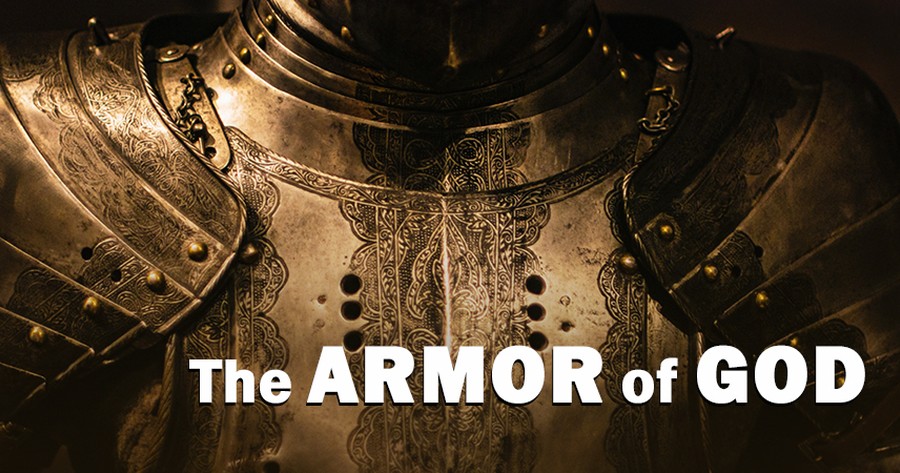
Defining the Terms of Engagement
Before the first verse is examined, the student must understand what is meant by the term "spiritual warfare." The precise phrase "spiritual warfare" does not appear in the English text of Scripture. It is a theological term derived from the biblical conception of the Christian life as a conflict . The Apostle Paul writes that "we do not wrestle against flesh and blood, but against... the spiritual forces of evil" (Ephesians 6:12). This cosmic struggle between the church and the Devil and his angels is the reality to which "spiritual warfare" refers .
The approach here is to let the text speak. We will not import modern deliverance manuals or anecdotal accounts into the Scripture. We will draw the doctrine from the Scripture, allowing its internal structures, its repeated phrases, and its precise vocabulary to dictate the interpretation. We submit to the text; the text does not submit to us.
PART ONE: THE PROTOEVANGELIUM - THE ORIGIN OF THE CONFLICT (GENESIS 3:1-15)
Any study of spiritual warfare must begin not at the armor, but at the enmity. The battle does not begin in Ephesians; it begins in Eden.
The Serpent's Incursion (Genesis 3:1-5)
"Now the serpent was more crafty than any of the wild animals the Lord God had made... He said to the woman, 'Did God really say...?'"
Phrase Analysis: "The serpent" (Ha-nachash - הנחש)
The agent of the first conflict is introduced as a creature, but one through whom a higher power speaks. Later Scripture identifies this power as "that ancient serpent called the devil, or Satan, who leads the whole world astray" (Revelation 12:9). The warfare begins with an attack on the Word of God. The enemy's strategy is to sow doubt about divine revelation ("Did God really say?") and to impugn the character of God ("God knows that... you will be like God").
The Promise of Enmity (Genesis 3:15)
"And I will put enmity between you and the woman, and between your offspring and hers; he will crush your head, and you will strike his heel."
This verse, the Protoevangelium (first gospel), is also the first declaration of spiritual warfare. It is not a suggestion or a possibility; it is a divine decree of perpetual conflict.
Phrase Analysis: "I will put enmity" (Eivah ashit - איבה אשית)
God Himself is the author of this warfare. He establishes the hostility. This is not a natural hatred but a divinely ordained conflict between two spiritual lineages: the seed of the serpent (those who follow the rebellion) and the seed of the woman (those who follow God). The battle lines are drawn by God.
Phrase Analysis: "He will crush your head, and you will strike his heel" (Hu yeshufcha rosh ve-atah teshufenu akev - הוא ישופך ראש ואתה תשופנו עקב)
This is the first prophecy of the outcome of spiritual warfare. The conflict will be mortal. The serpent will inflict a wound (the heel strike), but the offspring of the woman will deliver a fatal blow (the head crush). This is the template for all spiritual warfare: the enemy may wound, but Christ (the ultimate Seed) crushes. Believers fight from a victory that has already been secured in principle .
Theological Conclusion of Genesis 3
Spiritual warfare is not an innovation of the New Testament. It is woven into the fabric of redemptive history from the moment of the Fall. The battle is real, the enemy is personal, and the ultimate outcome is already decreed by God.
PART TWO: THE NATURE OF THE CONFLICT - THE APOSTOLIC FRAMEWORK (EPHESIANS 6:10-20)
The classic and most comprehensive passage on spiritual warfare is the Apostle Paul's conclusion to his letter to the Ephesians. This section will provide an exhaustive, verse-by-verse exposition.
VERSE 10: The Charge to Strength
"Finally, be strong in the Lord and in his mighty power."
Phrase Analysis: "Finally" (Tou loipou - Τοῦ λοιποῦ)
This adverb signals that what follows is the practical application of everything Paul has written in the previous five and a half chapters. Because believers have been blessed "in the heavenly realms with every spiritual blessing" (1:3), because they have been made alive from spiritual death (2:1-5), because they are members of one new humanity (2:15), because Paul prays for their power (3:16), and because they are to walk in unity, holiness, love, and light (4-5), therefore they must engage in this conflict. The indicative (what God has done) precedes the imperative (what believers must do).
Phrase Analysis: "Be strong" (Endynamoisthe - ἐνδυναμοῦσθε)
This is a present passive imperative. The passive voice is crucial: it literally means "be empowered." The strength for spiritual warfare is not self-generated. It is received. The present tense suggests a continuous, habitual action: "keep on being empowered." The believer's role is to position themselves as a vessel to receive divine enablement.
Phrase Analysis: "In the Lord" (En Kyrio - ἐν Κυρίῳ)
The sphere of this empowerment is vital. It is not strength "from" the Lord as a distant source, but strength "in" the Lord as the environment of existence. Union with Christ is the context for all spiritual conflict. Just as the branch derives strength from abiding in the vine (John 15), so the believer's power flows from vital union with the risen Christ.
Phrase Analysis: "And in his mighty power" (Kai en to kratei tes ischyos autou - καὶ ἐν τῷ κράτει τῆς ἰσχύος αὐτοῦ)
Paul piles up synonyms for power. Kratos denotes dominion, manifested power, the strength that holds sway. Ischys denotes inherent strength, ability, might. The phrase emphasizes the absolute sufficiency of the divine resource available. It is not a portion of power but the very might of the Lord Himself that is made accessible to the believer.
VERSE 11: The Command to Put on the Armor
"Put on the full armor of God, so that you can take your stand against the devil's schemes."
Phrase Analysis: "Put on" (Endysasthe - ἐνδύσασθε)
This is an aorist middle imperative. The aorist tense suggests a decisive, once-for-all act. The middle voice implies personal interest and involvement: "put on for yourself." There is a sense in which the believer must, at the outset of the Christian life, appropriate the provision God has made. This is the initial act of taking up one's position in Christ.
Phrase Analysis: "The full armor" (Ten panoplian - τὴν πανοπλίαν)
This Greek word panoplia refers to the complete equipment of a heavily armed soldier: shield, helmet, greaves, sword, and breastplate. It emphasizes that there are no missing pieces. The armor is comprehensive. To omit any piece is to leave a vulnerability. The definite article "the" suggests that this is the armor, the specific equipment provided by God, not armor of human devising.
Phrase Analysis: "Of God" (Tou Theou - τοῦ Θεοῦ)
The genitive is both possessive and source-indicating. The armor belongs to God; it is His own attributes—truth, righteousness, faith, salvation—that He shares with His people. It is also from God; He provides it. This is not armor that the believer fabricates through self-effort. It is divine provision for a divine conflict.
Phrase Analysis: "So that you can take your stand" (Pros to dynasthai hymas stenai - πρὸς τὸ δύνασθαι ὑμᾶς στῆναι)
The purpose of the armor is enabling. The verb stenai (to stand) is aorist active infinitive and carries military connotations of holding a critical position against an enemy assault. The objective is not necessarily to advance or conquer (though that comes elsewhere), but to hold the ground that has already been given in Christ.
Phrase Analysis: "Against the devil's schemes" (Pros tas methodeias tou diabolou - πρὸς τὰς μεθοδείας τοῦ διαβόλου)
The word methodeias (schemes, wiles, methods) suggests cunning, craftiness, and systematic strategy. It implies that the enemy does not operate randomly but with deliberate, calculated plans. "The devil" (diabolos) means "slanderer" or "accuser." His methods include deception (John 8:44), temptation (1 Thessalonians 3:5), accusation (Revelation 12:10), and hindrance (1 Thessalonians 2:18).
VERSE 12: The Nature of the Struggle
"For our struggle is not against flesh and blood, but against the rulers, against the authorities, against the powers of this dark world and against the spiritual forces of evil in the heavenly realms."
Phrase Analysis: "Our struggle" (Hemin he pale - ἡμῖν ἡ πάλη)
The word pale is a Greek term for wrestling, hand-to-hand combat. It implies personal, intense, close-quarters engagement. This is not long-range bombardment but direct, personal conflict. The pronoun "our" (dative of reference) universalizes the struggle: it belongs to all believers, not a special class of "warriors."
Phrase Analysis: "Is not against flesh and blood" (Ouk pros haima kai sarka - οὐ πρὸς αἷμα καὶ σάρκα)
This is a definitive statement about the identity of the true enemy. "Flesh and blood" is a Hebrew idiom for human beings, mortal humanity. The enemy is not your spouse, your boss, your political opponent, or your persecutor. To mistake the human instrument for the spiritual source is to fight the wrong battle with the wrong weapons.
Phrase Analysis: "Against the rulers, against the authorities" (Alla pros tas archas, pros tas exousias - ἀλλὰ πρὸς τὰς ἀρχάς, πρὸς τὰς ἐξουσίας)
These terms describe an ordered hierarchy of evil spiritual beings. Archas (rulers) suggests those who hold primal dominion. Exousias (authorities) suggests those who exercise delegated power. This is not a disorganized mob but a structured kingdom of darkness with ranks and assignments (cf. Colossians 1:16, where similar terms are used for created angelic orders, both good and fallen).
Phrase Analysis: "Against the powers of this dark world" (Pros tous kosmokratoras tou skotous toutou - πρὸς τοὺς κοσμοκράτορας τοῦ σκότους τούτου)
Kosmokratoras (world-rulers) is a powerful term. It suggests beings who exercise dominion over the ordered systems of the fallen world—its philosophies, its ideologies, its structures. "This dark world" (tou skotous toutou) identifies the moral and spiritual environment over which they preside: the realm of spiritual darkness that opposes the light of God.
Phrase Analysis: "Against the spiritual forces of evil in the heavenly realms" (Pros ta pneumatika tes ponerias en tois epouraniois - πρὸς τὰ πνευματικὰ τῆς πονηρίας ἐν τοῖς ἐπουρανίοις)
The final phrase identifies the essential nature and location of the enemy. They are "spiritual" (pneumatika), not material. They are characterized by "evil" (ponerias), active, malignant wickedness. And they operate "in the heavenly realms" (en tois epouraniois). This phrase in Ephesians always refers to the sphere of spiritual reality where Christ is seated (1:20) and where believers are blessed (1:3). The battlefield, therefore, is not primarily geographical but spiritual. The conflict is waged in a realm accessible only through faith and prayer.
VERSE 13: The Reason for Full Armor
"Therefore put on the full armor of God, so that when the day of evil comes, you may be able to stand your ground, and after you have done everything, to stand."
Phrase Analysis: "Therefore" (Dia touto - διὰ τοῦτο)
Because of the nature of the enemy (v. 12), and because of the inadequacy of human resources, the command to put on the full armor is reiterated.
Phrase Analysis: "When the day of evil comes" (Hina dynasthe antistenai en te hemera te ponera - ἵνα δυνηθῆτε ἀντιστῆναι ἐν τῇ ἡμέρᾳ τῇ πονηρᾷ)
Paul assumes the inevitability of attack. He does not say "if" but "when." The "day of evil" may refer to specific seasons of intense spiritual assault, times of temptation, persecution, or crisis. The armor is not primarily for peacetime display but for wartime engagement.
Phrase Analysis: "To stand your ground" (Antistenai - ἀντιστῆναι)
This verb intensifies the concept of standing. The prefix anti- means "against." It implies resisting, holding firm in the face of an assault. This is defensive warfare—withstanding the pressure of the enemy's attack.
Phrase Analysis: "After you have done everything" (Hapanta katergasamenoi - ἅπαντα κατεργασάμενοι)
This phrase acknowledges the effort involved. The spiritual warrior must do all that is required: put on the armor, pray, watch, resist. There is no room for passivity.
Phrase Analysis: "To stand" (Stenai - στῆναι)
The final posture is simply "to stand." After the assault has been withstood, after the battle is engaged, the objective is to remain standing, still holding the ground that belongs to Christ.
VERSES 14-17: The Six Pieces of Armor
"Stand firm then, with the belt of truth buckled around your waist, with the breastplate of righteousness in place, and with your feet fitted with the readiness that comes from the gospel of peace. In addition to all this, take up the shield of faith, with which you can extinguish all the flaming arrows of the evil one. Take the helmet of salvation and the sword of the Spirit, which is the word of God."
The Structural Phrase: "Stand firm" (Stete - στῆτε)
Having described the necessity of standing (vv. 11, 13), Paul now explains how to stand. The armor is not a list of abstract concepts but a description of the believer's resources in Christ.
1. The Belt of Truth
Phrase Analysis: "Belt of truth" (Perizosamenoi ten osphyn hymon en aletheia - περιζωσάμενοι τὴν ὀσφὺν ὑμῶν ἐν ἀληθείᾳ)
The belt was a foundational piece of equipment. It gathered the loose tunic, enabling freedom of movement. It also held the scabbard for the sword.
Phrase Analysis: "Truth" (Aletheia - ἀληθείᾳ)
The genitive is ambiguous: it could mean the belt is truth, or the belt of truth (characterized by truth). Most likely, it refers to the believer's sincerity and integrity, rooted in the revealed truth of God. This is truth in the inward parts (Psalm 51:6), a life of authenticity before God and others. It is also the objective truth of the gospel. Without truth, there is no foundation for any other piece of armor. A lie is a gap in the armor.
2. The Breastplate of Righteousness
Phrase Analysis: "Breastplate of righteousness" (Endysamenoi ton thoraka tes dikaiosynes - ἐνδυσάμενοι τὸν θώρακα τῆς δικαιοσύνης)
The breastplate covered the vital organs—the heart, lungs, and intestines. In ancient armor, it was essential for survival.
Phrase Analysis: "Righteousness" (Dikaiosynes - δικαιοσύνης)
This word has two dimensions in the New Testament. First, there is imputed righteousness, the righteous standing before God that comes through faith in Christ (Philippians 3:9). Second, there is imparted righteousness, the practical, daily righteousness of a life lived in obedience to God. The breastplate likely includes both. The believer must be secure in their standing before God (knowing they are accepted in Christ) and must pursue a life of practical holiness. Sin in the life is a gap in the breastplate, leaving the heart exposed to accusation.
3. The Footwear of the Gospel of Peace
Phrase Analysis: "Feet fitted with the readiness that comes from the gospel of peace" (Hypodesamenoi tous podas en hetoimasia tou euangeliou tes eirenes - ὑποδησάμενοι τοὺς πόδας ἐν ἑτοιμασίᾳ τοῦ εὐαγγελίου τῆς εἰρήνης)
Roman soldiers wore sturdy, nailed sandals (caligae) that provided stability and prevented slipping in combat.
Phrase Analysis: "Readiness of the gospel of peace"
This phrase is dense. It signifies the firm footing that comes from the gospel. The believer who knows they are at peace with God through Christ (Romans 5:1) has a stable platform from which to fight. The gospel also creates a readiness to move, whether to advance against the enemy or to carry the message of peace to others (Isaiah 52:7). The warrior's stance is grounded in the good news that the war has already been won by Christ.
4. The Shield of Faith
Phrase Analysis: "In addition to all this" (En pasin - ἐν πᾶσιν)
This phrase may mean "above all" or "in all circumstances," indicating the preeminent importance of the shield.
Phrase Analysis: "Shield of faith" (Ton thyreon tes pisteos - τὸν θυρεὸν τῆς πίστεως)
The word thyreos refers to the large, oblong shield (about four feet by two-and-a-half feet) used by heavily armed infantry. It was designed to interlock with others to form a wall.
Phrase Analysis: "With which you can extinguish all the flaming arrows of the evil one" (En ho dynesesthe panta ta bele tou ponerou ta pepyromena sbESAI - ἐν ᾧ δυνήσεσθε πάντα τὰ βέλη τοῦ πονηροῦ τὰ πεπυρωμένα σβέσαι)
"Flaming arrows" were a real military threat. Arrows would be dipped in pitch, set on fire, and shot to cause chaos and burn equipment. The large shield, often covered in leather and water-soaked, could extinguish them. Faith is the believer's response to the lies, temptations, and accusations of the enemy. When doubt is flung, faith trusts God's character. When temptation arises, faith believes God's promises are better than sin's pleasure. When accusation comes, faith rests in Christ's finished work. Faith extinguishes every lie by receiving and believing the truth of God.
5. The Helmet of Salvation
Phrase Analysis: "Helmet of salvation" (Ten perikephalaian tou soteriou dexasthe - τὴν περικεφαλαίαν τοῦ σωτηρίου δέξασθε)
The helmet protected the head, the seat of the mind and intellect.
Phrase Analysis: "Salvation" (Soteriou - σωτηρίου)
This refers both to the believer's present experience of being saved and the future hope of complete deliverance. The helmet is the assurance of salvation. The enemy often attacks the mind with doubts: "Can you really be saved? Is God's love truly for you? Will you hold out to the end?" The helmet is the settled confidence that one belongs to Christ and that He who began a good work will carry it to completion (Philippians 1:6). It protects the believer's mind from despair and discouragement.
6. The Sword of the Spirit
Phrase Analysis: "Sword of the Spirit" (Ten machairan tou Pneumatos - τὴν μάχαιραν τοῦ Πνεύματος)
Unlike the other pieces, which are primarily defensive, the sword is both defensive and offensive. The machaira was the short sword used in hand-to-hand combat. It was the weapon for close engagement.
Phrase Analysis: "Which is the word of God" (Ho estin rhema Theou - ὅ ἐστιν ῥῆμα Θεοῦ)
The Greek word used here is rhema, not logos. While both can mean "word," rhema often refers to a specific, spoken utterance. It is the Word of God applied by the Spirit to a specific situation. When Jesus was tempted in the wilderness (Matthew 4:1-11), He responded to each of Satan's attacks with a specific Scripture: "It is written." He wielded the rhema—the spoken, applied Word—as His weapon. The believer must know Scripture so thoroughly that the Spirit can bring the relevant truth to mind in the moment of battle, enabling them to counter the enemy's lies with divine truth.
VERSE 18: The Atmosphere of Battle - Prayer
"And pray in the Spirit on all occasions with all kinds of prayers and requests. With this in mind, be alert and always keep on praying for all the Lord's people."
Phrase Analysis: "Pray in the Spirit" (Dia pases proseuches kai deeseos proseuchomenoi en panti kairo en Pneumati - διὰ πάσης προσευχῆς καὶ δεήσεως προσευχόμενοι ἐν παντὶ καιρῷ ἐν Πνεύματι)
Prayer is not listed as a piece of armor; it is the atmosphere in which the armor is put on and used. To pray "in the Spirit" means to pray under the guidance and empowerment of the Holy Spirit, according to His will (Romans 8:26-27). It is prayer that aligns with God's purposes and draws on divine strength.
Phrase Analysis: "On all occasions" (En panti kairo - ἐν παντὶ καιρῷ)
This suggests unceasing prayer (1 Thessalonians 5:17)—a continual attitude of dependence and communion with God. The warrior never leaves the command post.
Phrase Analysis: "All kinds of prayers and requests" (Dia pases proseuches kai deeseos - διὰ πάσης προσευχῆς καὶ δεήσεως)
This comprehensive phrase covers the full range of prayer: adoration, confession, thanksgiving, supplication, intercession. No form of prayer is to be neglected.
Phrase Analysis: "Be alert" (Eis auto touto agrypnountes - εἰς αὐτὸ τοῦτο ἀγρυπνοῦντες)
Spiritual alertness is required. The enemy is subtle and seeks to catch the believer off guard (1 Peter 5:8). Prayer keeps the spirit awake and sensitive to danger.
Phrase Analysis: "For all the Lord's people" (Peri panton ton hagion - περὶ πάντων τῶν ἁγίων)
The battle is not individualistic. The armor is given to the church corporately. Believers must intercede for one another, recognizing that they are part of a larger army.
VERSES 19-20: The Apostolic Request for Prayer
"Pray also for me, that whenever I speak, words may be given me so that I will fearlessly make known the mystery of the gospel, for which I am an ambassador in chains. Pray that I may declare it fearlessly, as I should."
Paul, though an apostle, requests prayer. He demonstrates that no one is above the need for intercession. His specific request is for boldness in proclamation. This reveals that the ultimate offensive weapon in spiritual warfare is not binding demons or spiritual mapping, but the fearless declaration of the gospel . The mystery of the gospel is the message that Christ died for sins and rose again, defeating the powers of darkness. Proclaiming this message is the central act of spiritual warfare.
PART THREE: THE WEAPONS OF WARFARE - DIVINE POWER (2 CORINTHIANS 10:3-5)
The Text
"For though we live in the flesh, we do not wage war according to the flesh. The weapons of our warfare are not the weapons of the world. Instead, they have divine power to demolish strongholds. We tear down arguments and every presumption set up against the knowledge of God; and we take captive every thought to make it obedient to Christ."
Verse 3 - Phrase Analysis: "We live in the flesh" (En sarki gar peripatountes - ἐν σαρκὶ γὰρ περιπατοῦντες)
Paul acknowledges the human condition. Believers exist in the mortal body, subject to its limitations and weaknesses. The battlefield is the realm of human experience, but the battle is not constrained by human methods.
Phrase Analysis: "We do not wage war according to the flesh" (Ou kata sarka strateuometha - οὐ κατὰ σάρκα στρατευόμεθα)
The nature of the warfare determines the nature of the weaponry. Because the conflict is spiritual (Ephesians 6:12), the methods must be spiritual. Fleshly weapons—human manipulation, carnal anger, political power, physical force—are ineffective and inappropriate.
Verse 4 - Phrase Analysis: "The weapons of our warfare" (Ta hopla tes strateias hemon - τὰ ὅπλα τῆς στρατείας ἡμῶν)
The word hopla is the general term for weapons or tools. It is the same root used in the "armor" (panoplia) of Ephesians 6. Believers are equipped with specific implements for the conflict.
Phrase Analysis: "Are not the weapons of the world" (Ou sarkika alla dynata to theo - οὐ σαρκικὰ ἀλλὰ δυνατὰ τῷ Θεῷ)
The contrast is absolute. They are not of the flesh (sarkika); they are powerful (dynata) to God—that is, they possess divine effectiveness.
Phrase Analysis: "To demolish strongholds" (Pros kathairesin ochyromaton - πρὸς καθαίρεσιν ὀχυρωμάτων)
"Strongholds" (ochyromaton) is a military term for fortified positions, bastions, or prisons. In this context, they are intellectual and spiritual fortifications: entrenched patterns of thinking, deeply held lies, philosophical systems, and proud arguments that are erected against the true knowledge of God . These strongholds hold people captive.
Verse 5 - Phrase Analysis: "We tear down arguments" (Logismous kathairountes - λογισμοὺς καθαιροῦντες)
Logismous (arguments, reasonings) refers to human speculations, philosophies, and rationalizations that are used to justify rebellion against God.
Phrase Analysis: "Every presumption set up against the knowledge of God" (Kai pan hypsoma epairomenon kata tes gnoseos tou Theou - καὶ πᾶν ὕψωμα ἐπαιρόμενον κατὰ τῆς γνώσεως τοῦ Θεοῦ)
Hypsoma (presumption, lofty thing) refers to anything that exalts itself—pride, arrogance, self-sufficiency. These are the ramparts of the stronghold. They are "set up against" the true knowledge of God, obstructing the view of His glory and the reception of His truth.
Phrase Analysis: "We take captive every thought to make it obedient to Christ" (Kai aichmalotizontes pan noema eis ten hypakoen tou Christou - καὶ αἰχμαλωτίζοντες πᾶν νόημα εἰς τὴν ὑπακοὴν τοῦ Χριστοῦ)
This is the positive work of spiritual warfare. It is not enough to demolish falsehood; truth must be installed. Every thought (noema), every mental construct, must be captured and brought into alignment with the lordship of Christ. This is the renewal of the mind (Romans 12:2). The battlefield is the mind. The victory is the submission of the intellect to divine revelation.
Theological Conclusion of 2 Corinthians 10
Spiritual warfare is primarily a war of ideas. The enemy's strongholds are lies, false beliefs, and proud thoughts that exalt themselves against God. The weapons are not mystical incantations but the proclamation of truth, the preaching of the gospel, and the renewal of the mind through Scripture.
PART FOUR: THE POSTURE OF THE BELIEVER - RESISTANCE AND SUBMISSION (JAMES 4:7 AND 1 PETER 5:8-9)
James 4:7
"Submit yourselves, then, to God. Resist the devil, and he will flee from you."
Phrase Analysis: "Submit yourselves to God" (Hypotagete oun to Theo - ὑποτάγητε οὖν τῷ Θεῷ)
This is the first and essential step. Hypotagete (submit) is an aorist passive imperative, meaning "place yourself under authority." Before the believer can resist the enemy, they must be rightly related to God. Submission to God means recognizing His sovereignty, obeying His commands, and depending on His strength. The one who is not under God's authority has no authority over the devil.
Phrase Analysis: "Resist the devil" (Antistete de to diabolō - ἀντίστητε δὲ τῷ διαβόλῳ)
This is the same verb used in Ephesians 6:13 (antistenai). It means to withstand, to oppose. The promise attached is staggering: "he will flee from you." The devil is not omnipresent. He can be in only one place at a time. And he is a coward before the believer who stands in the authority of Christ and submission to God. Resistance, not passivity, is the command.
1 Peter 5:8-9
"Be alert and of sober mind. Your enemy the devil prowls around like a roaring lion looking for someone to devour. Resist him, standing firm in the faith, because you know that the family of believers throughout the world is undergoing the same kind of sufferings."
Phrase Analysis: "Be alert and of sober mind" (Nepsate, gregoreusate - νήψατε, γρηγορήσατε)
Two short, sharp imperatives. Nepsate (be sober) implies mental clarity, freedom from intoxicating influences (whether literal or metaphorical). Gregoreusate (be watchful, alert) suggests military vigilance. The believer must not be asleep or drunk. They must be awake and clear-headed.
Phrase Analysis: "Your enemy the devil" (Ho antidikos hymon diabolos - ὁ ἀντίδικος ὑμῶν διάβολος)
Antidikos (adversary) is a legal term for an opponent in a lawsuit. The devil is the accuser, the one who brings charges against the brethren (Revelation 12:10).
Phrase Analysis: "Prowls around like a roaring lion" (Os leon oryomenos peripatei - ὡς λέων ὠρυόμενος περιπατεῖ)
The imagery is of a predator on the hunt. The lion's roar is not an attack but a tactic of intimidation. The enemy seeks to paralyze with fear. He is "looking for someone to devour" (zeton tina katapiein). The verb katapiein means to swallow up, to consume utterly. The danger is real, but the warning is given so that believers will take refuge in the Greater Lion, the Lion of the tribe of Judah (Revelation 5:5).
Phrase Analysis: "Resist him, standing firm in the faith" (Ho antistete stereo te pistei - ᾧ ἀντίστητε στερεοὶ τῇ πίστει)
Again, resistance is commanded. The location of firmness is "in the faith"—both the objective faith (the body of Christian truth) and the subjective act of trusting God. Solidarity with the worldwide body of believers ("the family of believers throughout the world") provides encouragement and perspective; the battle is not unique to any individual.
PART FIVE: THE VICTORY OF CHRIST - THE FOUNDATION OF ALL WARFARE (COLOSSIANS 2:13-15)
The Text
"When you were dead in your sins and in the uncircumcision of your flesh, God made you alive with Christ. He forgave us all our sins, having canceled the charge of our legal indebtedness, which stood against us and condemned us; he has taken it away, nailing it to the cross. And having disarmed the powers and authorities, he made a public spectacle of them, triumphing over them by the cross."
Verse 14: The Cancellation of Debt
Phrase Analysis: "Canceled the charge of our legal indebtedness" (Exaleipsas to kath' hemon cheirographon tois dogmasin - ἐξαλείψας τὸ καθ᾽ ἡμῶν χειρόγραφον τοῖς δόγμασιν)
The cheirographon was a handwritten certificate of debt. In this metaphor, it represents the entire record of humanity's transgressions against God's law. This debt was "against us" and "condemned us."
Phrase Analysis: "Nailing it to the cross" (Proselosas auto to stauro - προσηλώσας αὐτὸ τῷ σταυρῷ)
The image is powerful. The document of debt was publicly nailed to the cross of Christ. In Roman executions, a placard listing the charges (titulus) was often nailed above the criminal. Here, Christ takes the list of our sins and nails it to His own cross. The debt is paid in full by His death.
Verse 15: The Disarming of the Powers
Phrase Analysis: "Having disarmed the powers and authorities" (Apekdysamenos tas archas kai tas exousias - ἀπεκδυσάμενος τὰς ἀρχὰς καὶ τὰς ἐξουσίας)
The verb apekdysamenos is rich. It can mean "to strip off" or "to disarm." It carries the image of stripping a defeated enemy of their weapons and armor. At the cross, Christ engaged the full force of the powers of darkness. They did their worst; they killed the Author of life. But in His death, He stripped them of their power. The primary weapon of the enemy—sin and death, backed by the law's condemnation—was rendered useless because sin was atoned for and death was defeated.
Phrase Analysis: "He made a public spectacle of them" (Edeigmatisen en parresia - ἐδειγμάτισεν ἐν παρρησίᾳ)
This is the language of a Roman triumphal procession. A victorious general would lead his conquered enemies through the streets of Rome, chained and humiliated, as a public display of his victory. At the cross, Christ led the defeated powers in His triumphal procession. The crucifixion, which appeared to be Satan's greatest victory, was in fact his ultimate defeat.
Phrase Analysis: "Triumphing over them by the cross" (Thriambeusas autous en auto - θριαμβεύσας αὐτοὺς ἐν αὐτῷ)
The victory was accomplished "in it" (the cross). The cross is not a symbol of defeat but of triumph. Christ did not win in spite of the cross; He won by the cross.
Theological Conclusion of Colossians 2
The foundation of all spiritual warfare is not what the believer does, but what Christ has already done. The enemy is a defeated foe. The believer does not fight for victory; they fight from victory. Spiritual warfare is the daily appropriation and application of the victory Christ secured at Calvary .
PART SIX: THE STRATEGY OF THE ENEMY - A CATALOGUE OF SCHEMES
1. Deception (John 8:44; 2 Corinthians 11:3)
"He was a murderer from the beginning, not holding to the truth, for there is no truth in him. When he lies, he speaks his native language, for he is a liar and the father of lies."
Satan's primary language is the lie. He deceives the nations (Revelation 20:3). He disguises himself as an angel of light (2 Corinthians 11:14). His servants masquerade as servants of righteousness (2 Corinthians 11:15). The primary defense against deception is the belt of truth and the sword of the Spirit.
2. Temptation (1 Thessalonians 3:5; 1 Corinthians 7:5)
"For this reason, when I could stand it no longer, I sent to find out about your faith. I was afraid that in some way the tempter had tempted you and that our labor might have been in vain."
Satan is "the tempter." He exploits human desires (James 1:14-15) to lure believers into sin. He tempted Eve in the garden, Jesus in the wilderness, and he tempts believers today. The shield of faith extinguishes the flaming arrows of temptation by trusting God's promises over sin's allure.
3. Accusation (Revelation 12:10)
"For the accuser of our brothers and sisters, who accuses them before our God day and night, has been hurled down."
Diabolos means "accuser" or "slanderer." Satan's strategy includes bringing charges against believers before the throne of God. He reminds God (and the believer) of their sins, their failures, their unworthiness. The defense against accusation is the breastplate of righteousness (the imputed righteousness of Christ) and the helmet of salvation (the assurance of being in Christ).
4. Hindrance and Obstruction (1 Thessalonians 2:18)
"For we wanted to come to you—certainly I, Paul, did, again and again—but Satan blocked our way."
Paul attributes his inability to visit the Thessalonians to satanic opposition. The enemy seeks to hinder the progress of the gospel, to block the work of ministry, to create obstacles in the path of obedience. Prayer and perseverance are the responses.
5. Intimidation and Persecution (1 Peter 5:8; Revelation 2:10)
"Be alert and of sober mind. Your enemy the devil prowls around like a roaring lion looking for someone to devour."
The roaring lion tactic is intimidation. Through threats, persecution, suffering, and the fear of death, the enemy seeks to make believers cower or compromise. The response is to stand firm in faith, knowing that the suffering is temporary and that the Lion of Judah has prevailed.
6. False Teaching (1 Timothy 4:1)
"The Spirit clearly says that in later times some will abandon the faith and follow deceiving spirits and things taught by demons."
Paul warns that demonic activity operates through false doctrine. "Things taught by demons" are not necessarily overtly evil but are subtle perversions of truth that lead people away from Christ. The sword of the Spirit, the Word of God, is the discernment tool that exposes false teaching.
PART SEVEN: THE OFFENSIVE MANDATE - PROCLAMATION AND DISCIPLESHIP
While much of the New Testament's teaching on spiritual warfare focuses on standing firm and resisting, there is an offensive dimension: the proclamation of the gospel.
The Great Commission (Matthew 28:18-20)
"Then Jesus came to them and said, 'All authority in heaven and on earth has been given to me. Therefore go and make disciples of all nations...'"
Phrase Analysis: "All authority" (Pasa exousia - πᾶσα ἐξουσία)
Jesus' declaration of universal authority precedes the commission. Because He has defeated the powers (Colossians 2:15) and been exalted above every name (Philippians 2:9), He possesses all authority. The church goes in His authority to claim the nations for Him.
Implication for Spiritual Warfare
Taking the gospel to the lost is an act of spiritual warfare. The lost are held captive by the enemy (2 Timothy 2:26). Their eyes are blinded by the god of this age (2 Corinthians 4:4). Proclaiming Christ is the means by which captives are set free . The feet fitted with the readiness of the gospel of peace (Ephesians 6:15) are not just for standing but for going.
The Binding of the Strong Man (Matthew 12:29)
"Or again, how can anyone enter a strong man's house and carry off his possessions unless they first tie up the strong man? Then they can plunder his house."
Jesus uses this parable to explain His own ministry of deliverance. The "strong man" is Satan. His "house" is the world. His "possessions" are the people he holds captive. But Jesus, the Stronger One, has bound the strong man through His death and resurrection. Now the church goes to plunder his house—to rescue the perishing through the proclamation of the gospel.
PART EIGHT: THE FINAL OUTCOME - THE DOOM OF THE ENEMY (REVELATION 20:1-10, 10:7-10)
The storyline of Scripture concludes with the final defeat of the enemy. Spiritual warfare has an end.
The Binding of Satan (Revelation 20:1-3)
"And I saw an angel coming down out of heaven, having the key to the Abyss and holding in his hand a great chain. He seized the dragon, that ancient serpent, who is the devil, or Satan, and bound him for a thousand years."
This binding, whatever its precise timing, demonstrates that Satan's power is limited and subject to divine authority. He is not free to do as he wishes; he operates only within the boundaries God permits.
The Final Defeat (Revelation 20:7-10)
"When the thousand years are over, Satan will be released from his prison and will go out to deceive the nations... But fire came down from heaven and devoured them. And the devil, who deceived them, was thrown into the lake of burning sulfur, where the beast and the false prophet had been thrown. They will be tormented day and night for ever and ever."
The final destiny of the enemy is the lake of fire. Eternal, conscious torment awaits the devil and his angels. This is not a vindictive statement but a declaration of divine justice. The one who led humanity into sin, who accused the brethren, who sought to thwart the purposes of God, will be eternally removed from God's new creation.
The Great Reversal: Access to the Tree of Life (Revelation 22:1-3)
"Then the angel showed me the river of the water of life, as clear as crystal, flowing from the throne of God and of the Lamb down the middle of the great street of the city. On each side of the river stood the tree of life... No longer will there be any curse."
The curse pronounced in Genesis 3 is finally and fully removed. The Tree of Life, barred to fallen humanity in Eden, is now freely accessible to the redeemed. The enemy who brought the curse is gone. The warfare is over. The victory is complete.
CONCLUSION: THE CALL TO FAITHFULNESS
This exhaustive study of the biblical doctrine of spiritual warfare yields several inescapable conclusions:
The Battle is Real. The believer who ignores spiritual warfare does so at their own peril. The enemy is personal, powerful, and strategic. To be unaware of his schemes is to be vulnerable to them.
The Victory is Won. The foundation of all spiritual warfare is the finished work of Christ on the cross. He disarmed the powers, triumphed over them, and secured the victory. Believers do not fight for victory; they fight from victory .
The Armor is Provided. God has not left His people defenseless. The full armor of God—truth, righteousness, peace, faith, salvation, and Scripture—is available to every believer. It must be put on and worn daily.
The Weapons are Spiritual. The weapons of our warfare are not carnal but mighty through God. Prayer, the Word, faith, and the gospel are the instruments of victory. Human methods, fleshly efforts, and unbiblical practices are not only ineffective but dangerous.
The Mind is the Battlefield. Spiritual warfare involves the demolition of strongholds—lies, arguments, and proud thoughts that exalt themselves against the knowledge of God. The renewal of the mind through Scripture is essential .
The Posture is Resistant. Believers are called to submit to God and resist the devil. Resistance is active, not passive. It requires vigilance, sobriety, and a firm stance in the faith .
The Mission is Proclamation. The ultimate offensive weapon is the gospel. Taking the good news to the lost is the means by which captives are set free. The church advances not by binding territorial spirits but by proclaiming the Lordship of Christ .
The End is Certain. Satan's doom is sealed. He will be cast into the lake of fire. The curse will be lifted. The Tree of Life will be accessible. The people of God will dwell in safety and peace forever.
A Final Word of Encouragement
To the believer engaged in spiritual warfare: take heart. The struggle is real, but the One who is in you is greater than the one who is in the world (1 John 4:4). The God of peace will soon crush Satan under your feet (Romans 16:20). Stand firm. Put on the armor. Pray without ceasing. Wield the Word. Proclaim the gospel. And fix your eyes on Jesus, the author and perfecter of faith, who for the joy set before Him endured the cross, despising the shame, and sat down at the right hand of the throne of God.
The battle belongs to the Lord. And the victory is certain.
Amen.
💬 0 Comments
Leave a Comment
Your email address will not be published. All comments are reviewed before appearing.